On the island of Spildra, in the Kvænangen fjord you can find many remains from the Sami culture like sacrificial sites, Human Graves, Bear Graves & much more.
It is believed that Spildra was a central hub within the Sami people of the region.
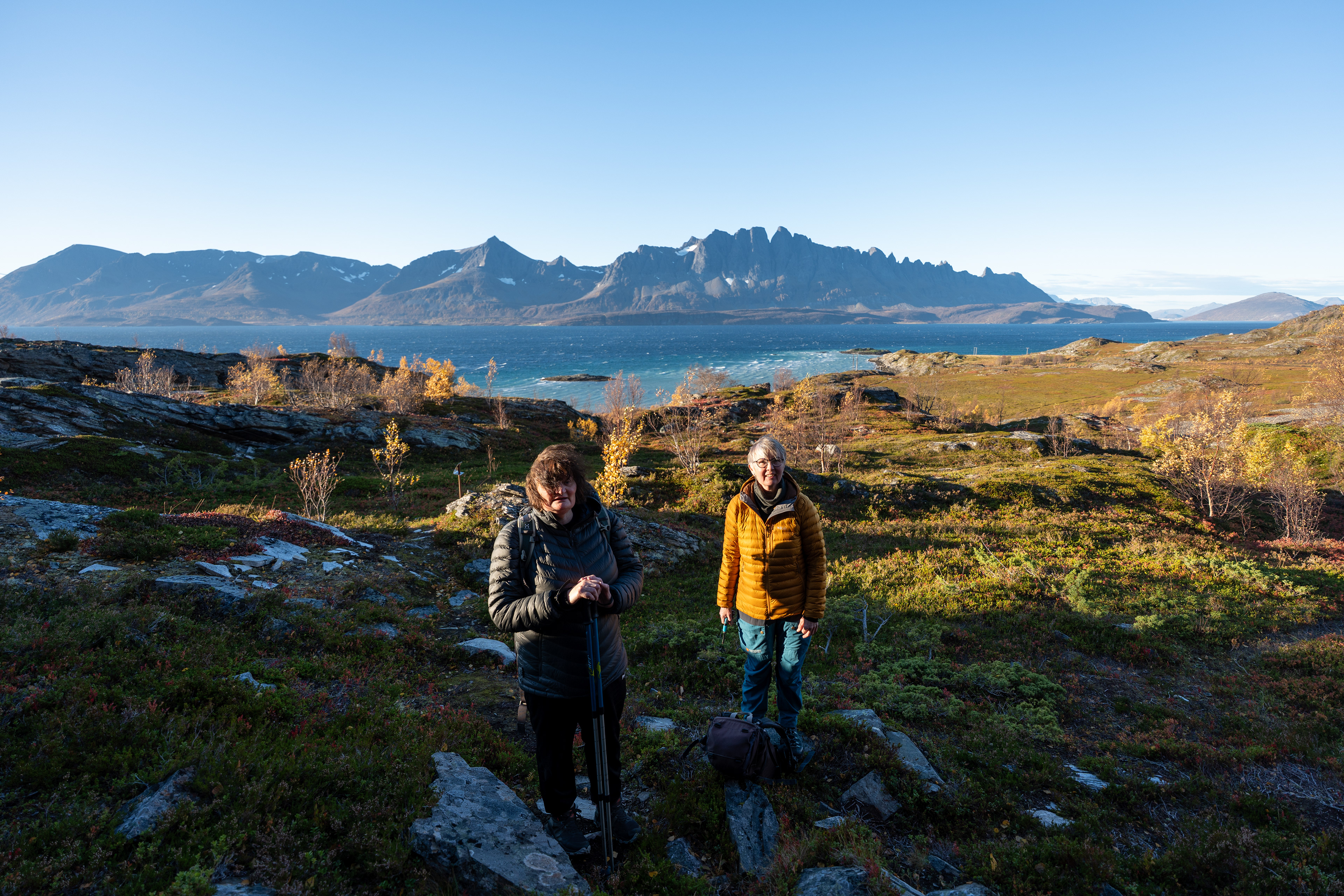
Today, we follow Ingvild, a member of the Sami parliament and Marit, a Norwegian archeologist.
Every year they come back to Spildra with a mission : preserve, maintain and document these incredible remains that are, for some, more than 1000 years old.
Sami People & Religion
The Sami are indigenous people from northern Scandinavia and the northern west part of Russia.
The first mention in history of the Sami people is made by the Romans early on of our period. They are described as nomadic people.
The Sami religion is polytheistic; they have gods for different aspects of their lives such as hunting, fishing, weather conditions. Their beliefs are intrinsically related to animism, making them see a life force within all natural elements : rocks, rivers, mountains, animals…
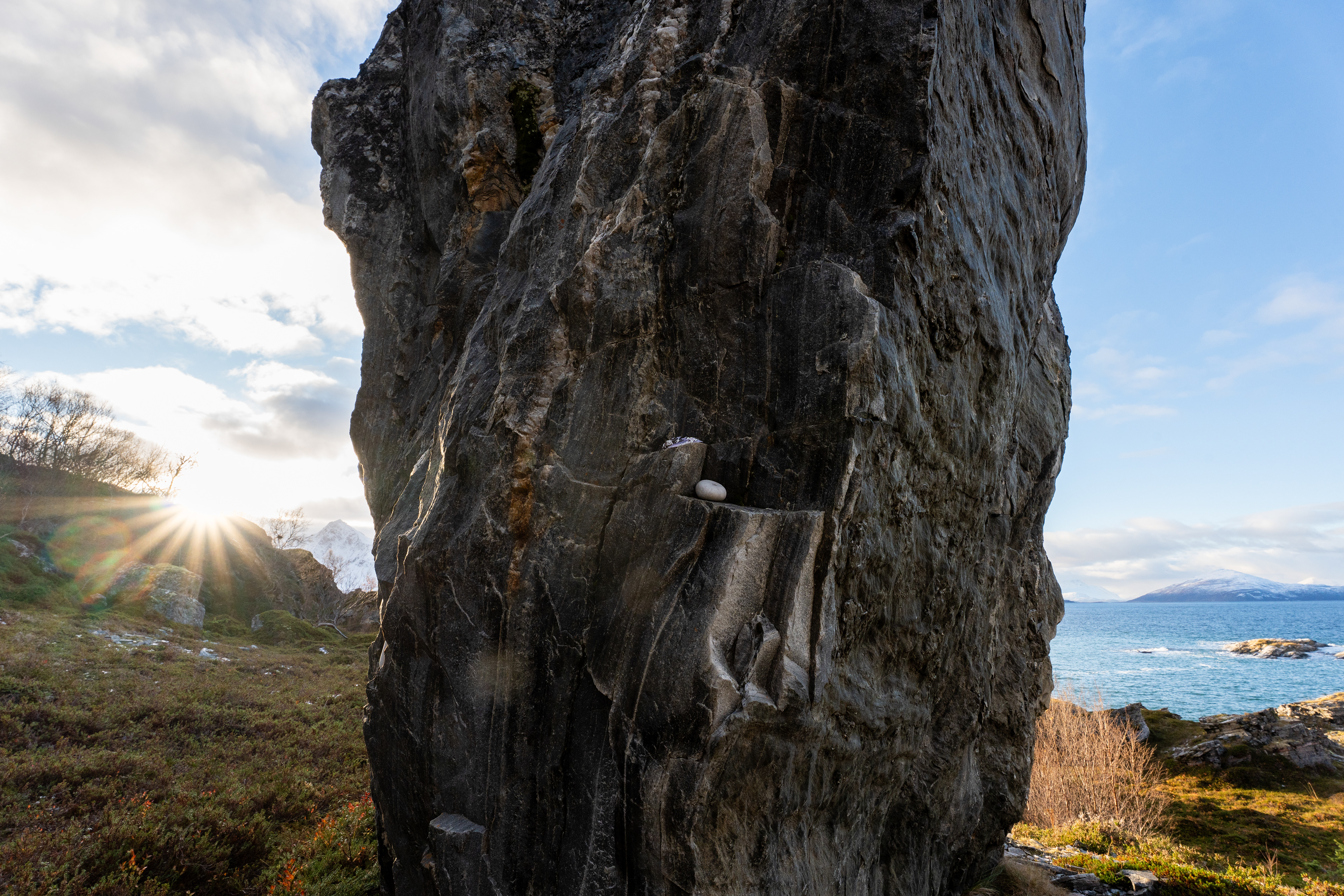
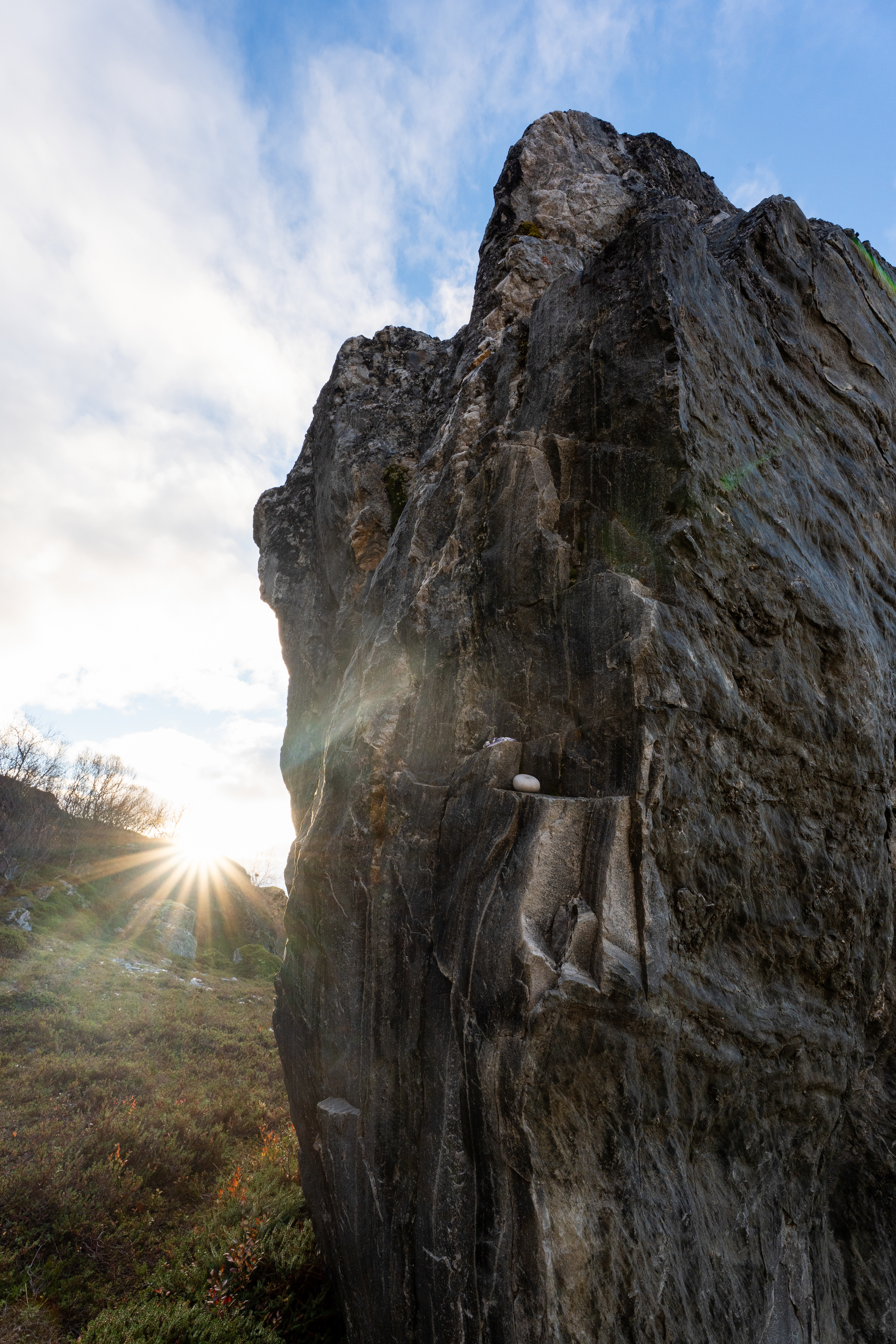
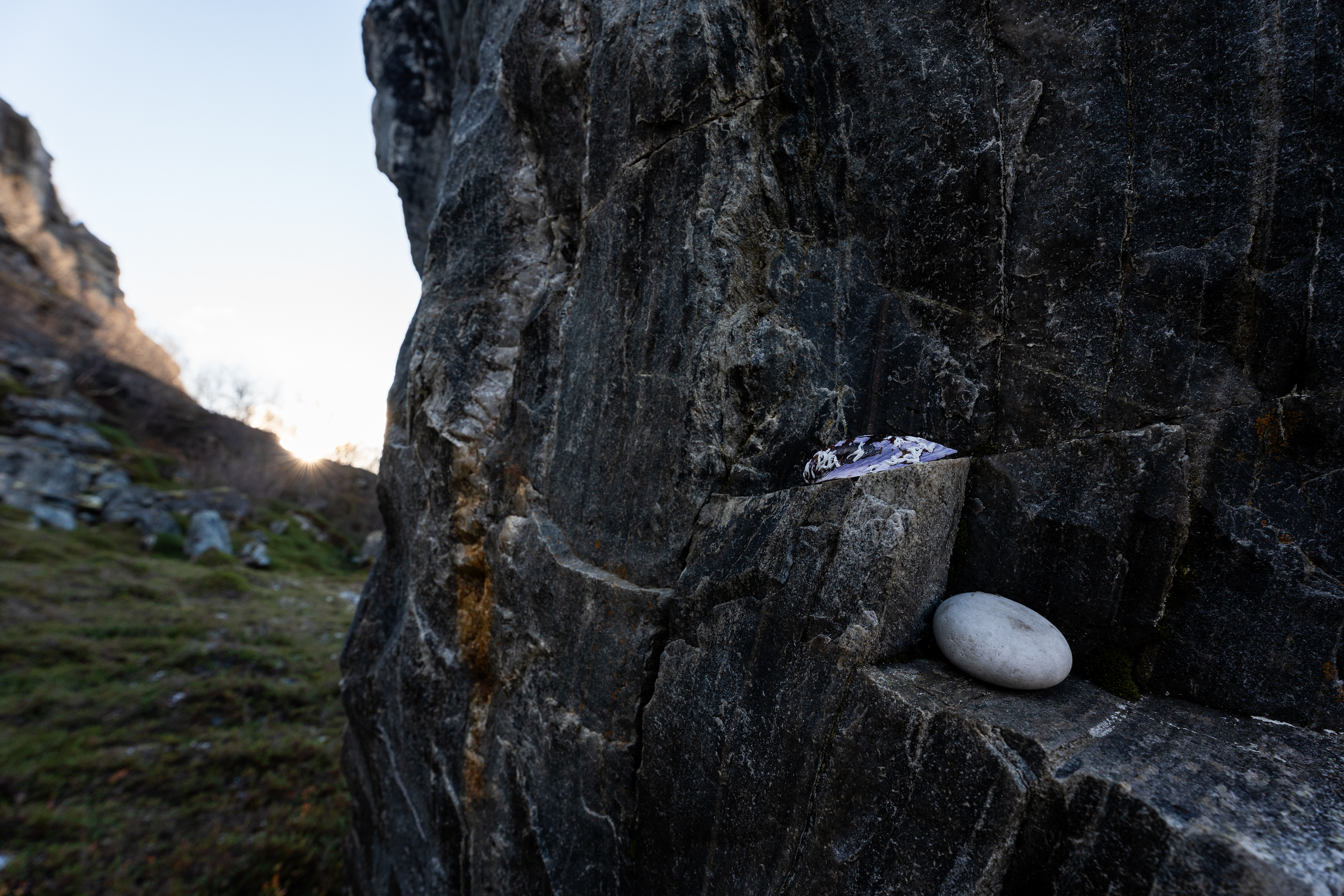
The Priest's Rock - A Sieidi where you can see offerings have been made.
In the image above, you can see a Sieidi, a holy or sacrificial rock where offerings were made. It was considered to have high powers in specific fields of life. Once the offerings were made, it was believed that the people would get something in return. So if you made offerings to the Sieidi of the Halibuts for instance, you would benefit from subsequent abundant halibut.
Sami Human Graves
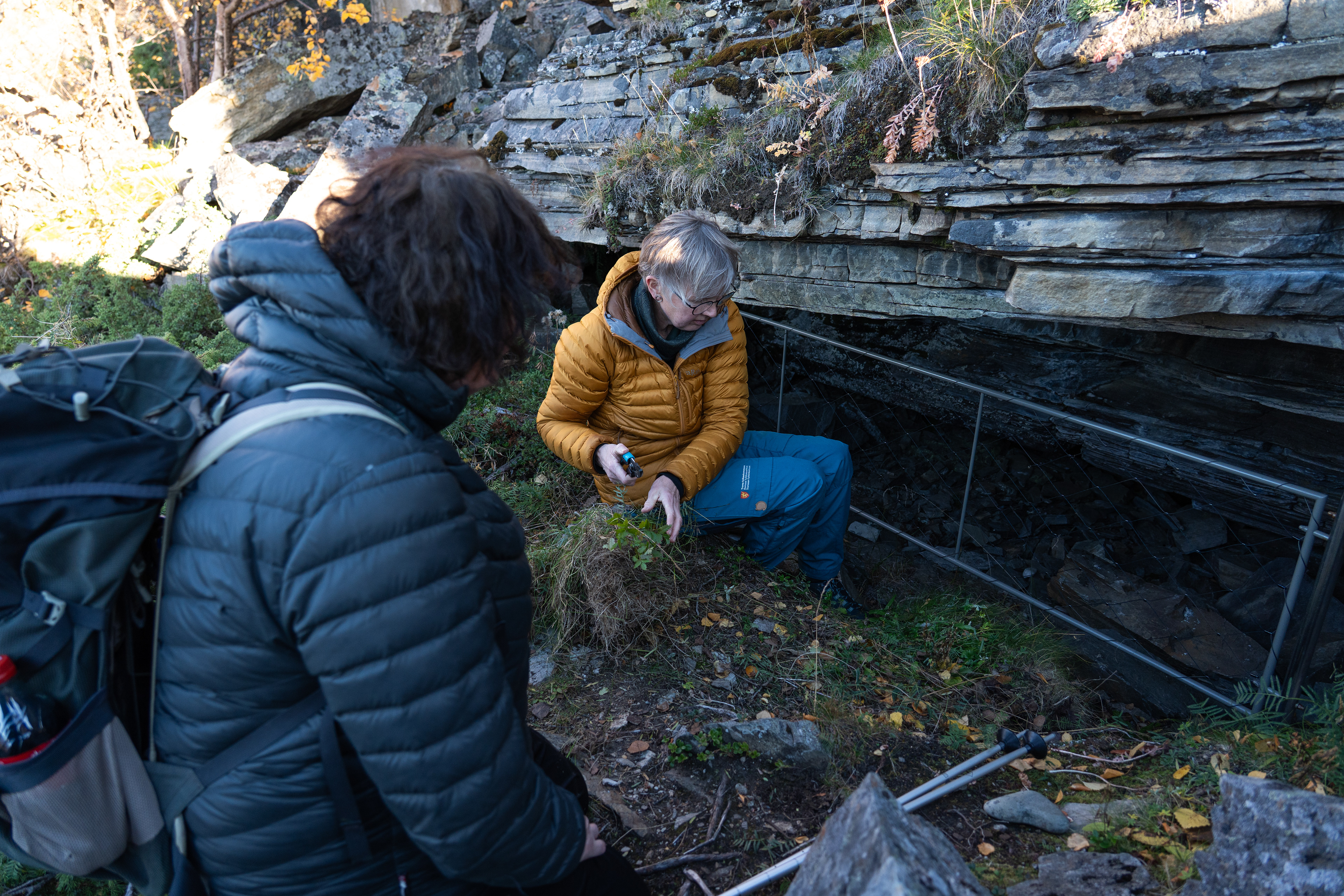
On Spildra, you can also find remains of Human Graves (photo on the right).
In this cave, lay the skeletons of two individuals, one of a woman and one of a young girl, who was probably 12 years old when she died.
But there is something very special and rare about this particular human grave : The two individuals were buried with 200 years of difference between them and nobody knows why.
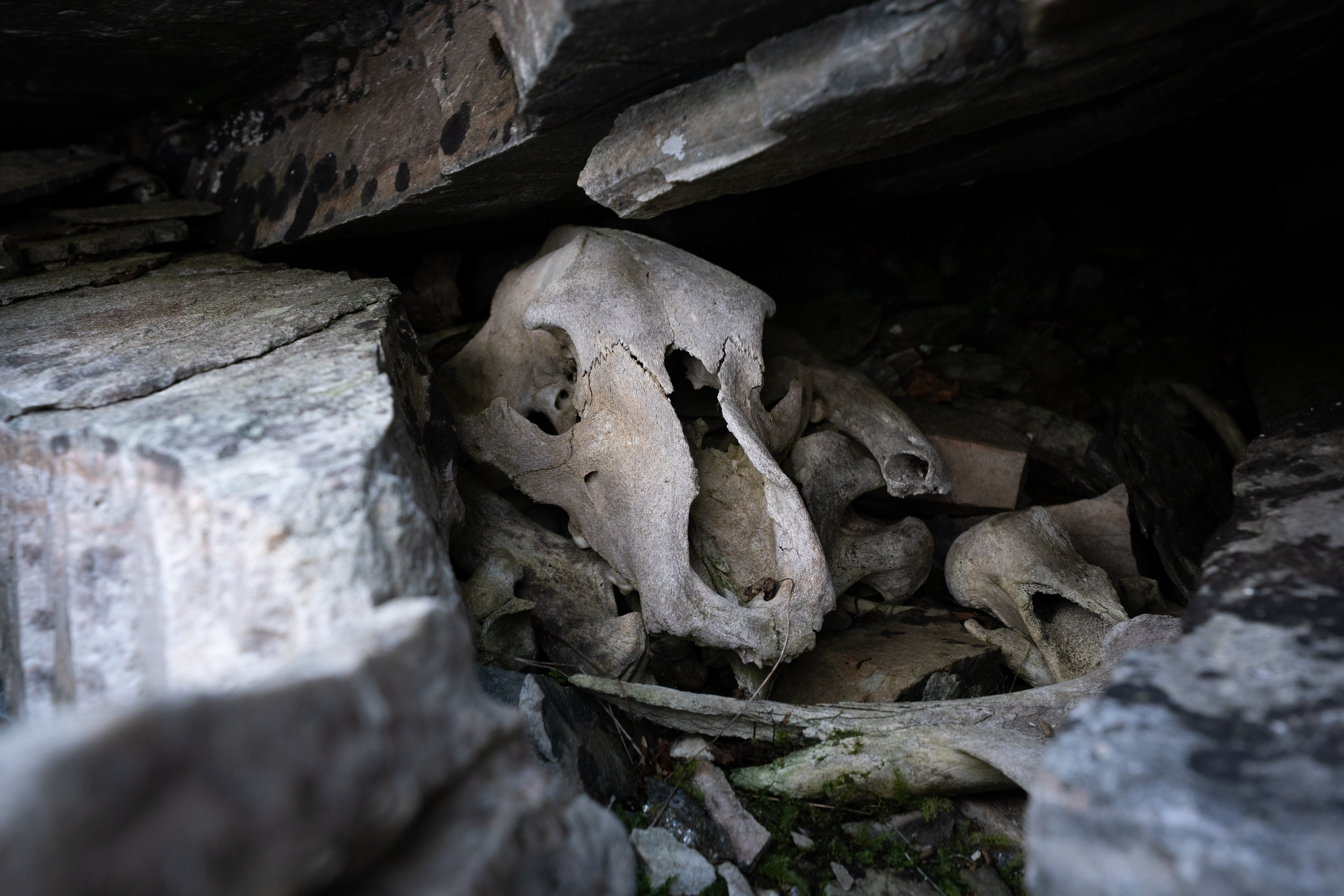
Along with that, they were buried among other remains : a bone from a herring gull and one from a bear.
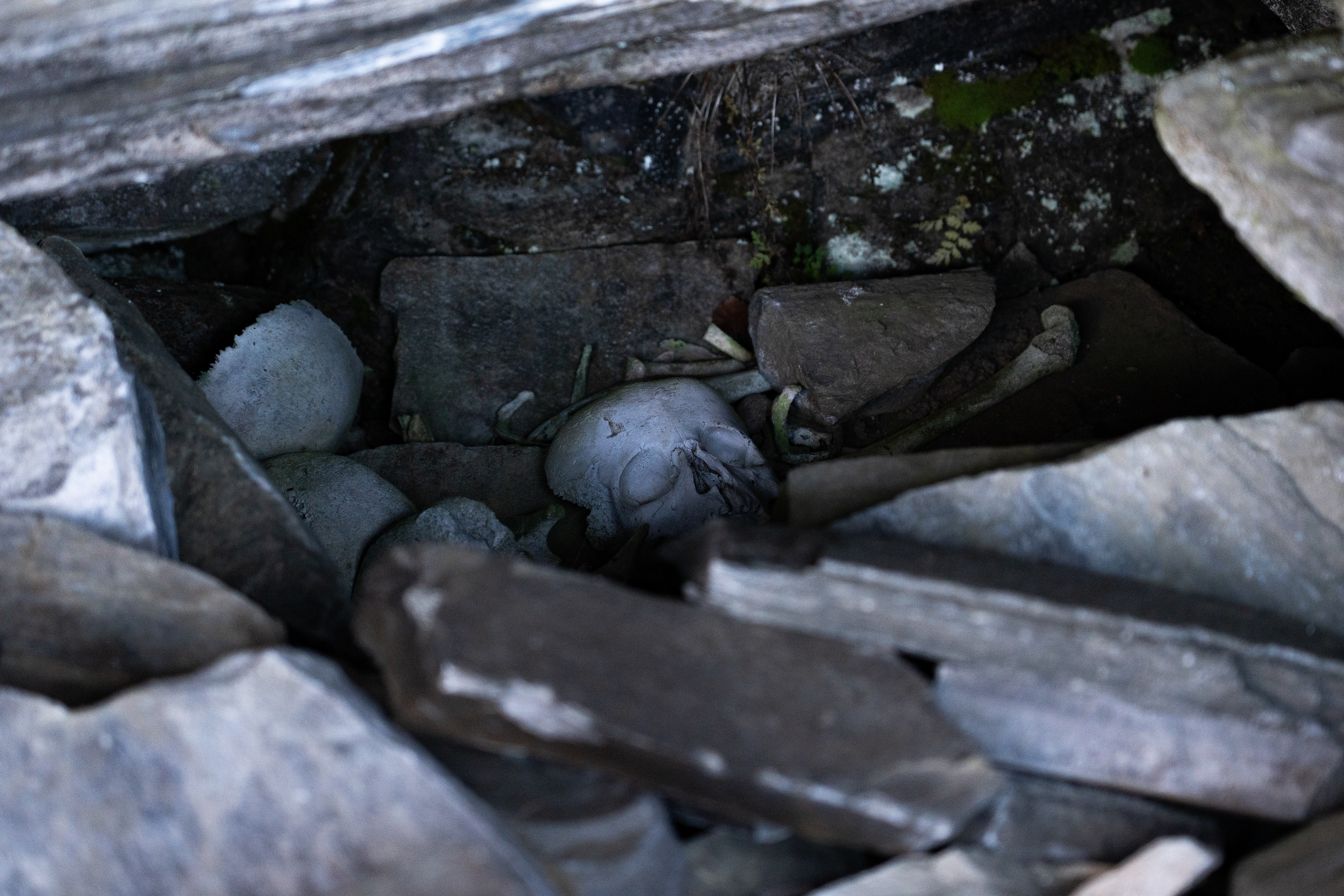
Human Grave, Spildra - The carbon dating positions the grave between 1165 AD and 1410 AD.
The Bear Cult
The Bear had a very important place in Sami culture. It was considered to be a special animal, above all others, because it was believed to be in touch with both the spiritual world and the human world.
It was believed that the bear would be reborn in Sáiva, one of the otherworlds after death. And there, he would talk to his fellows saying how good it was to be honoured by humans and feasted upon.
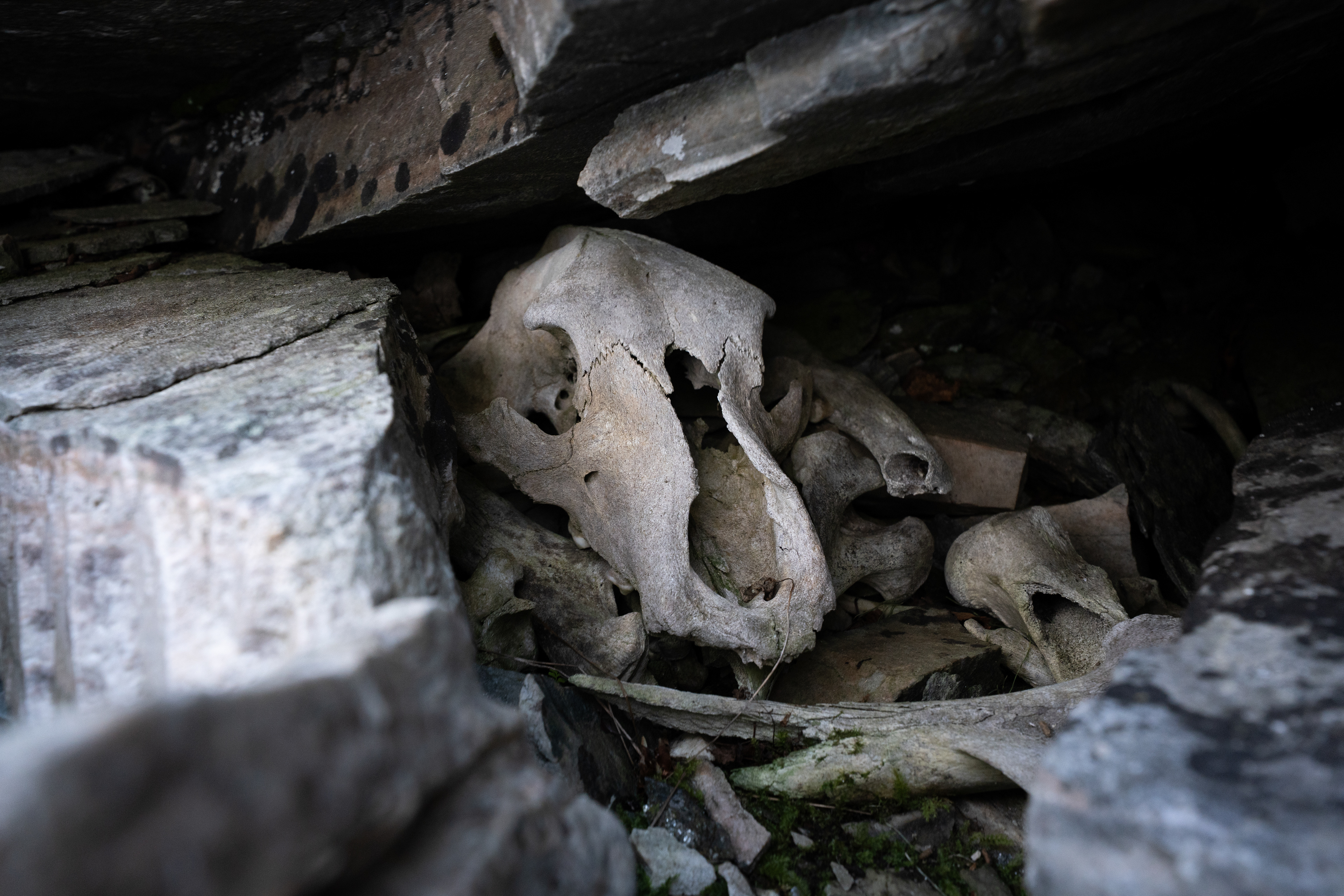
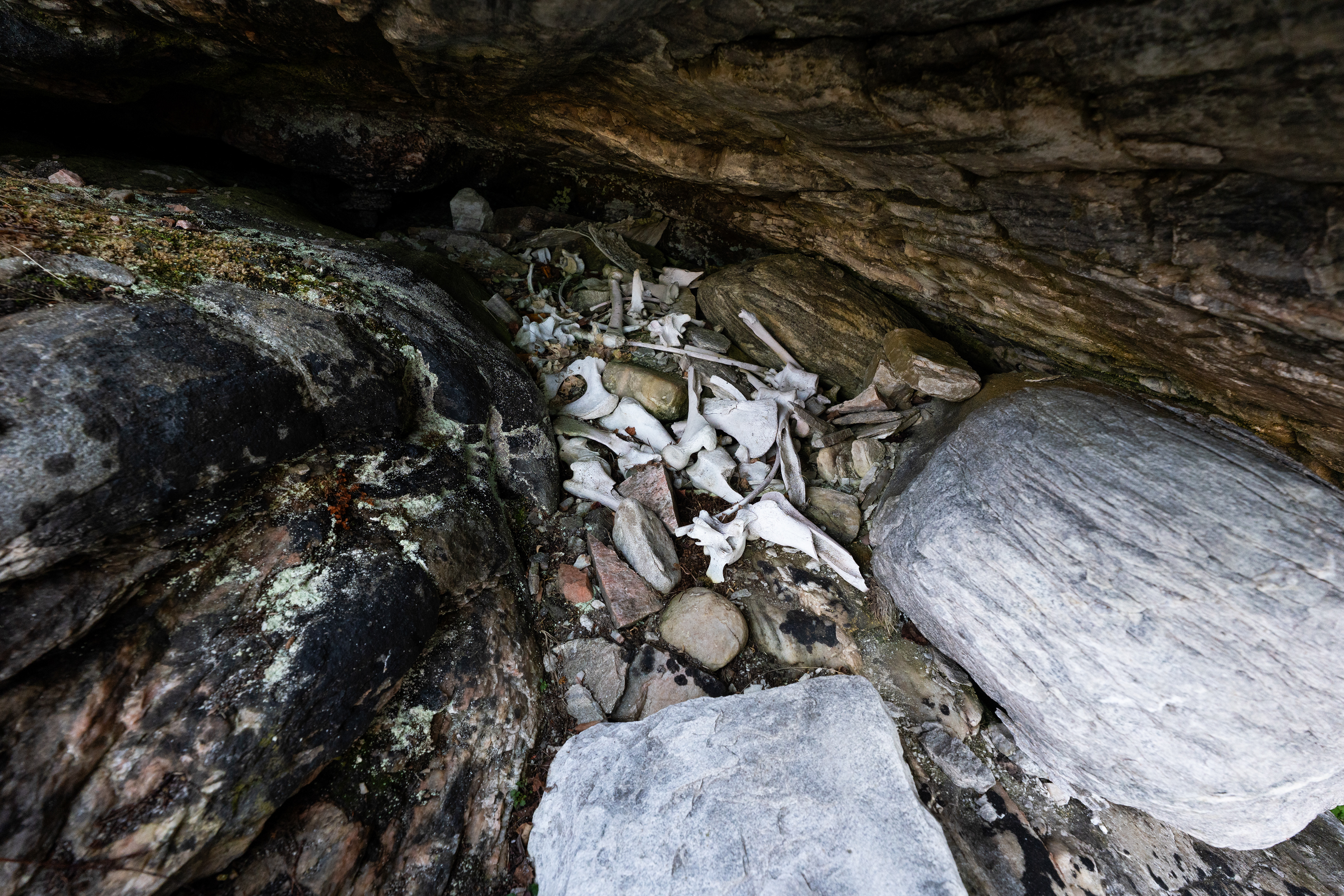
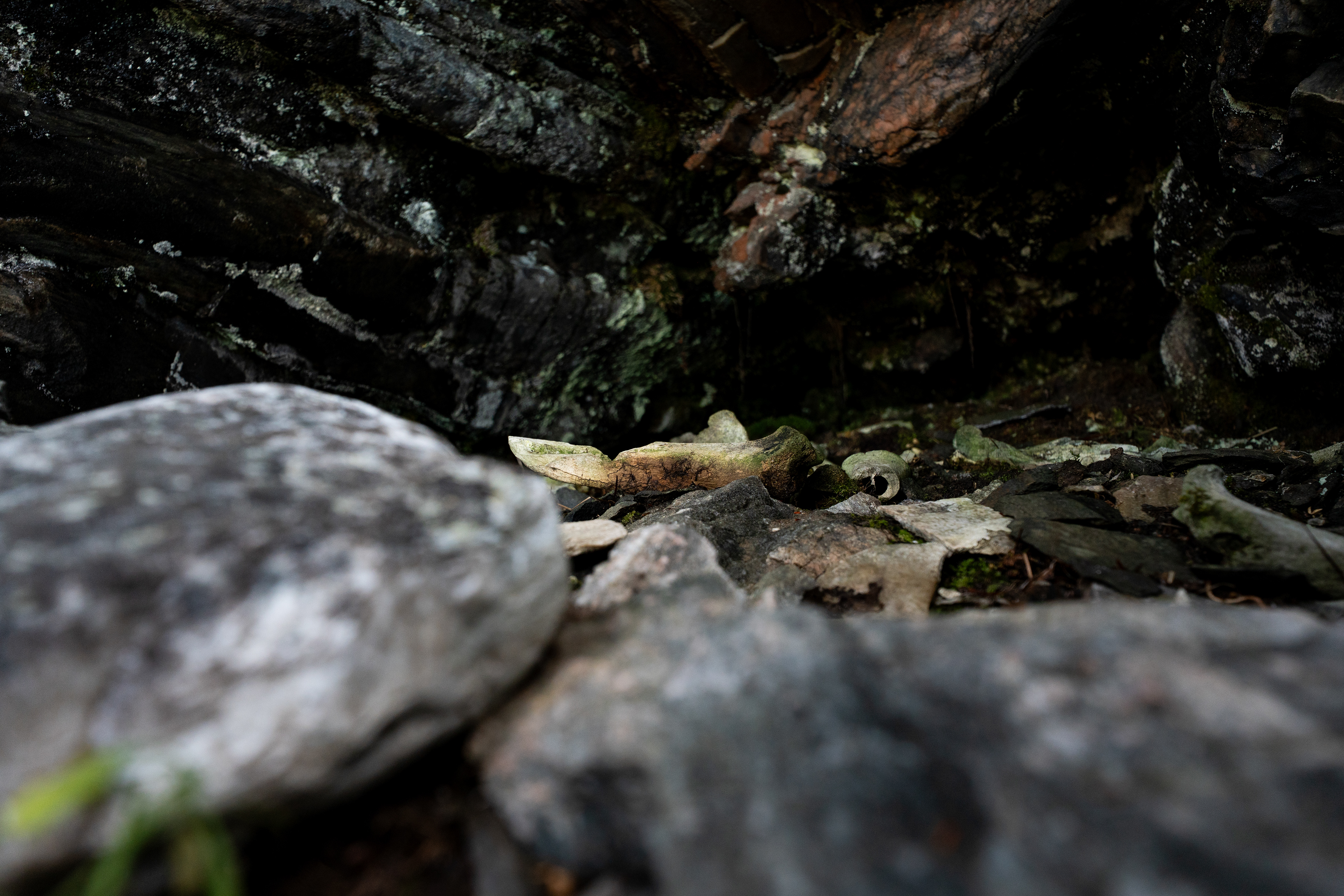
Bear Graves, Spildra - The carbon dating positions the bear skeletons between 1000 and 1300 AD.
The Bear cult is a special sacrifice practiced in traditional cultures of the North such as Native Americans and ethnic groups of northern Eurasia.
Spildra is home to the largest concentration of bear graves in all Scandinavia : out of 30 bear graves in Norway, Spildra has 7.
When they would kill a bear, the Sami made a big celebration as it was an important event for the community. Everybody gathered and consolidated their knowledge and traditions. For instance, women would sing to accompany the hunters while carrying the animal.
Sami Houses
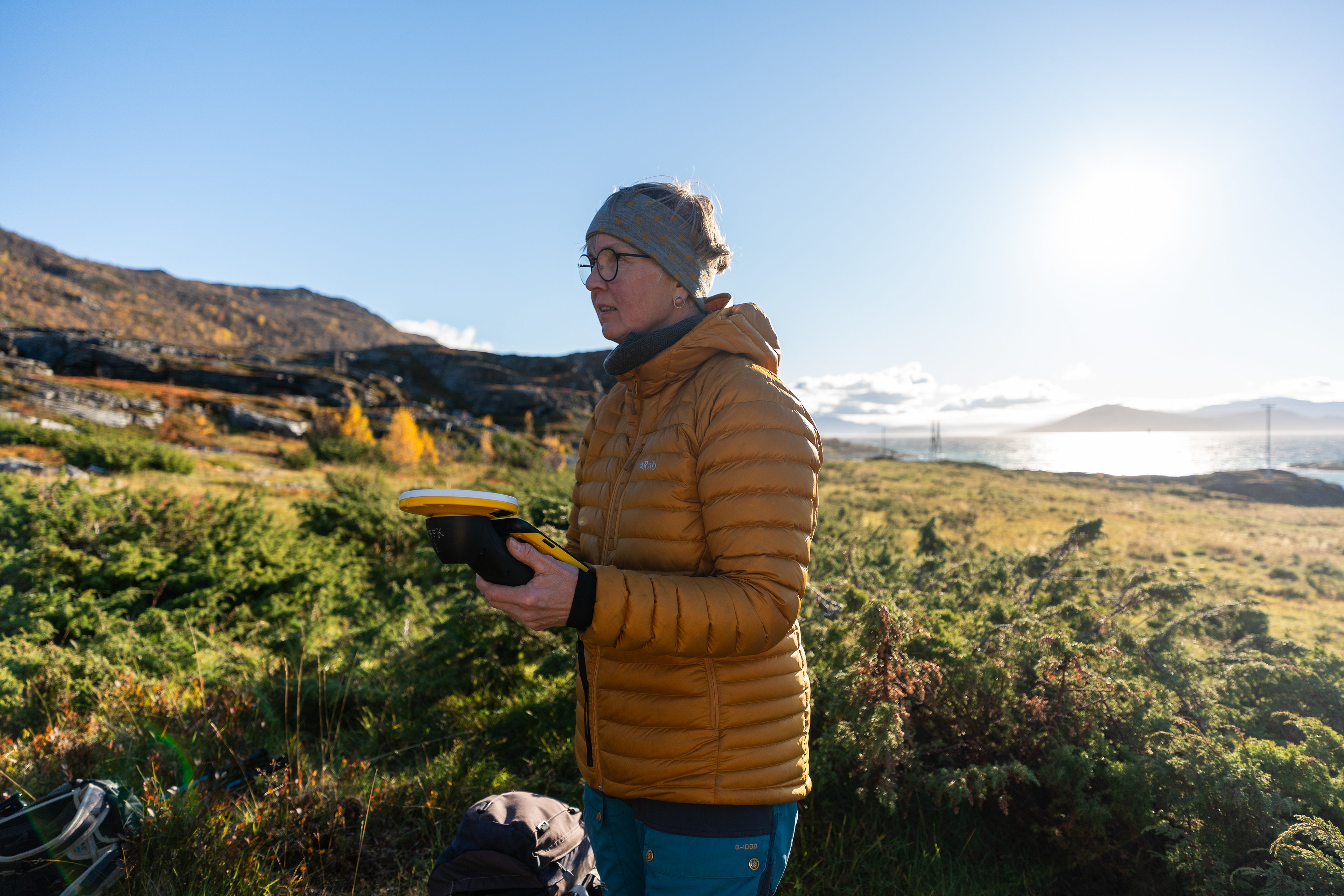
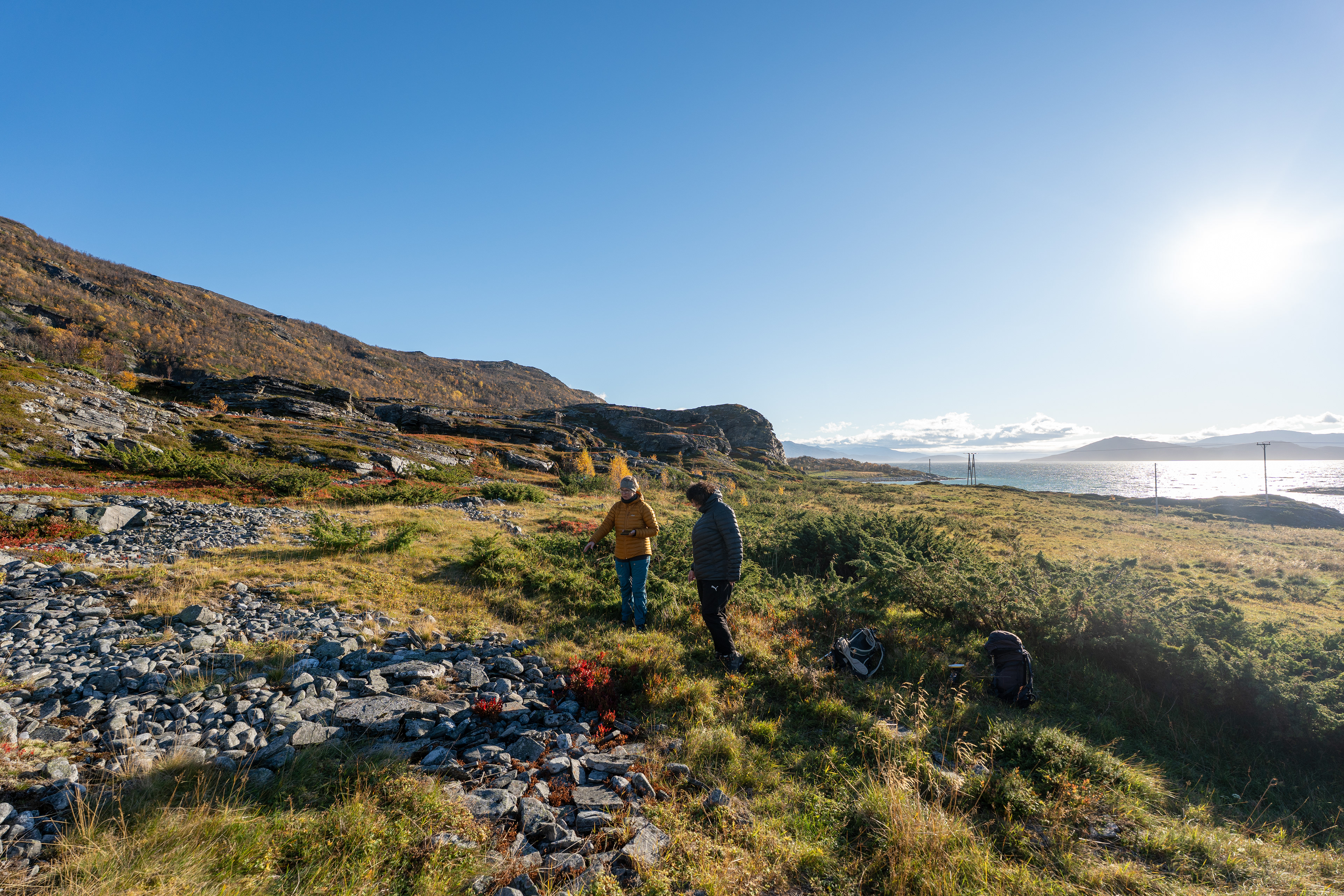
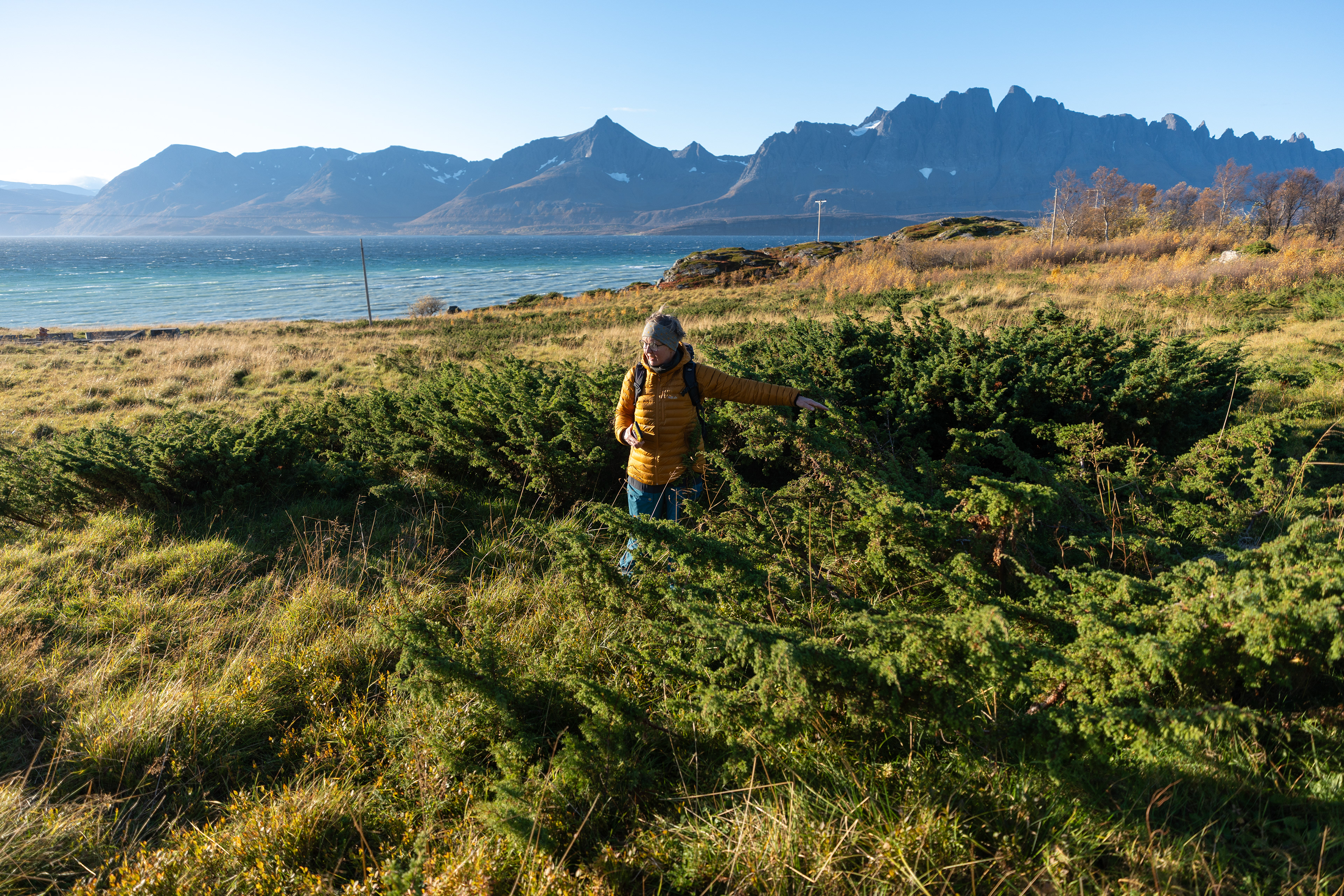
Today, Ingvild and Marit came to document the lengths of these shapes on the ground. The round recesses on the floor are traces left by the Sami houses called Turf Huts or Gamme.
Thanks to Marit’s tools, she uses her steps to obtain the dimensions of the footprints left by these houses of the past.
Some of these traces date back to the Neolithic period. The Gamme were made out of wood and turf. The Sami kept the heat with a fire placed in the middle of the floor and laid on the ground with their feet closer to the fire creating thus a star shape.
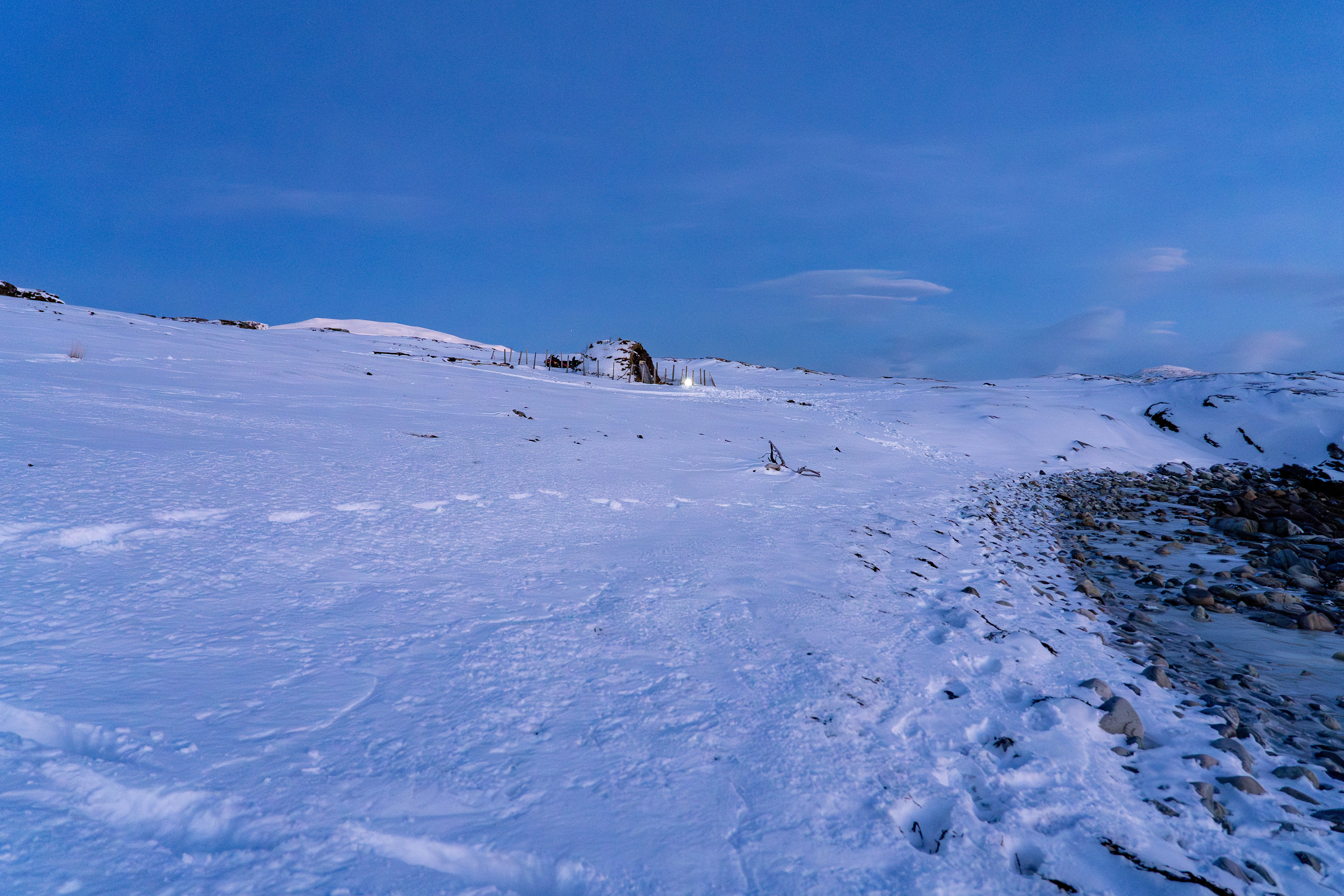
Gamme / Turf Hut - Spildra
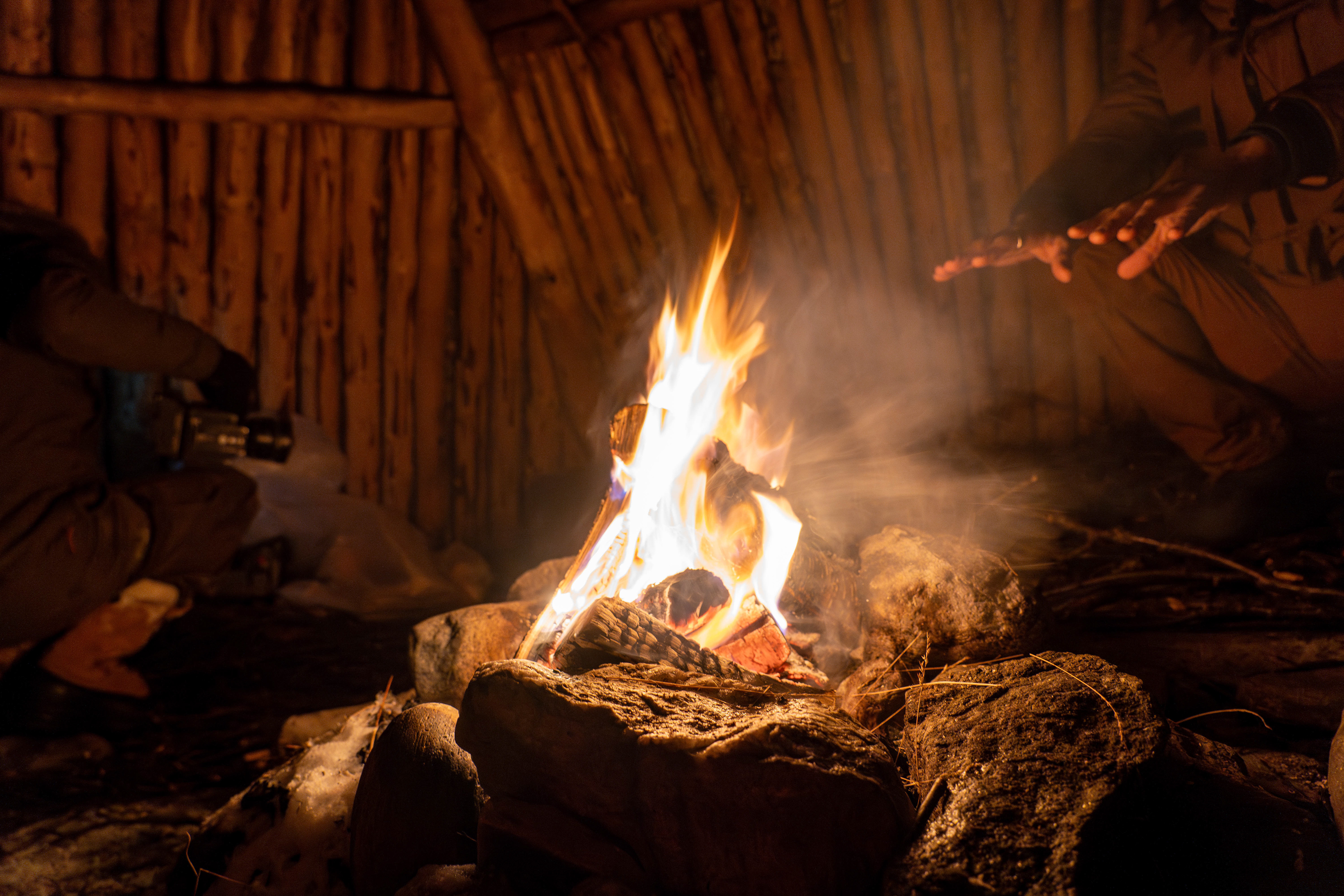
Fire in the Gamme.
References
Spildra - taking the past into the future by Ivar Bjørklund and Sven Erik Grydeland
Special thanks to :
Roy Isaksen
Ingrid Larsen
Marit Chruickshank